What is GCOP?+
GCOP is an intelligent retrofit and supervisory optimization solution for qualifying chilled-water systems.
What does GCOP stand for?+
GCOP stands for Green Chiller Optimization Package.
Does GCOP replace the chiller?+
No. It communicates with compatible controls to optimize approved operating setpoints; it does not replace the chiller.
How does GCOP reduce chiller energy use?+
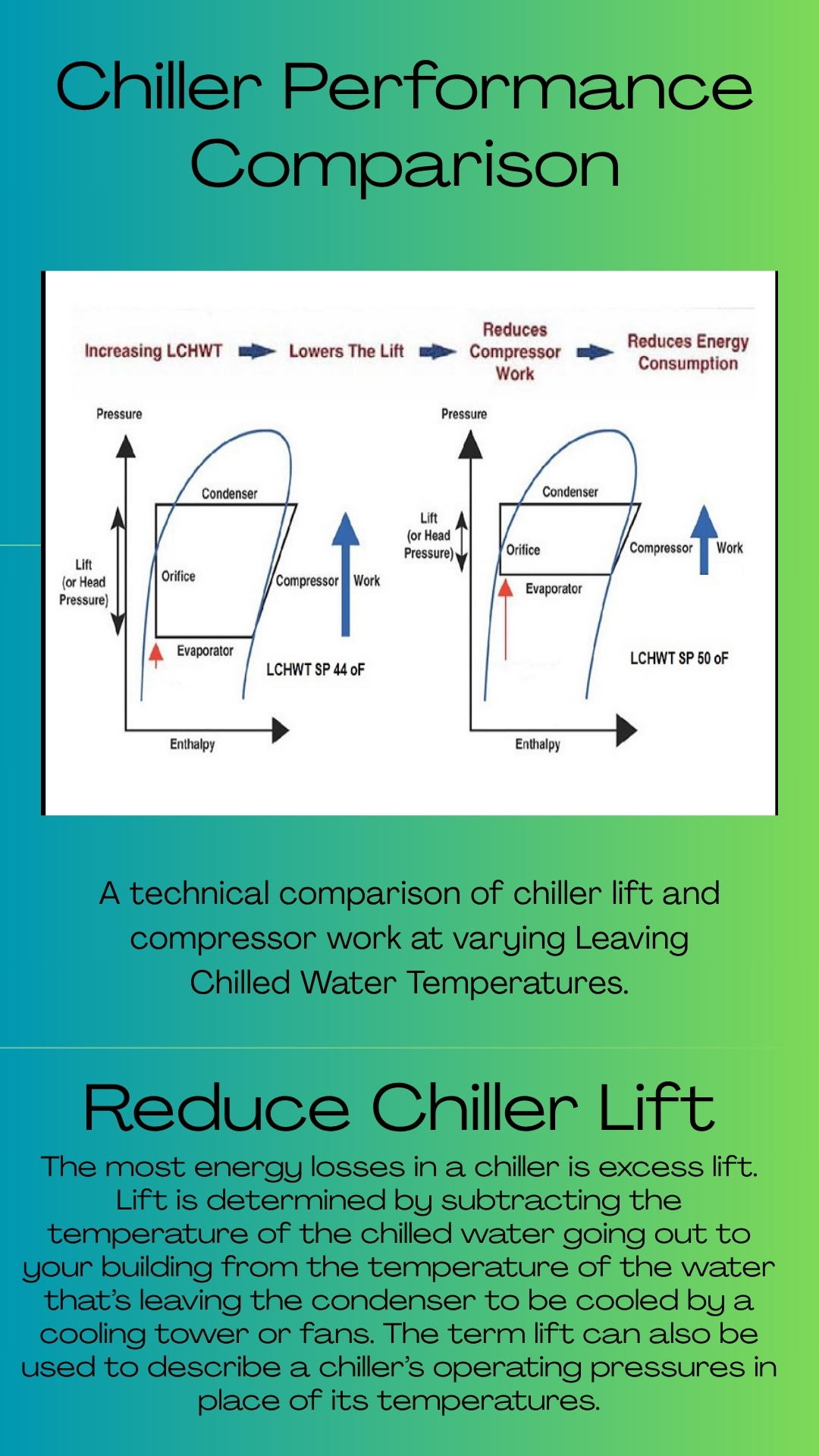
It can raise the Leaving Chilled Water Temperature setpoint when conditions permit, reducing avoidable compressor lift and work.
What is Leaving Chilled Water Temperature?+
It is the temperature of chilled water leaving the chiller and entering the building distribution system.
What is a chilled-water reset strategy?+
It adjusts the leaving-water setpoint as load and operating conditions change rather than holding one value continuously.
What is chiller lift?+
Lift describes the compressor burden associated with moving refrigerant from lower evaporator pressure to higher condenser pressure.
How does reducing lift save energy?+
A lower required pressure rise may reduce compressor work, subject to the chiller and current operating conditions.
What operating values does GCOP use?+
Inputs may include outdoor temperature, chilled-water temperatures, current setpoint, capacity, cooling load, zone temperatures, and optional meter or plant data.
What is fuzzy logic?+
It is a control method that can balance degrees of several operating conditions rather than relying only on rigid on-or-off rules.
Does GCOP use BACnet/IP?+
Yes, when the chiller controller, points, permissions, and approved network architecture support it.
Can GCOP integrate with an existing BMS?+
Potentially. Available objects, writable points, manufacturer permissions, cybersecurity, and client approval must be reviewed.
Does GCOP work with every chiller?+
No. Compatibility must be established through equipment and controls review.
What savings can GCOP achieve?+
Qualifying applications may have potential for approximately 8% to 25% energy reduction, but actual results vary.
Is the 8% to 25% range guaranteed?+
No. It is a qualified potential range, not a guarantee, proposal, or site-specific projection.
What is Evaluation Mode?+
It alternates optimized and baseline-style calendar days while collecting data for comparison.
Why are even and odd days compared?+
The legacy workflow activates optimization on even-numbered days and uses an approved baseline strategy on odd-numbered days to support comparison.
Is 44°F always used as the baseline?+
No. The legacy method identifies 44°F, but each project's approved baseline must be confirmed by DLV Energy and the client engineering team.
How long should Evaluation Mode operate?+
The appropriate duration depends on facility operation, representativeness, weather, load, and the agreed measurement plan.
Why should Evaluation Mode be repeated seasonally?+
Different weather, occupancy, and plant-loading conditions can materially change chiller performance.
Can GCOP use direct power meters?+
Yes. Optional meters can provide a stronger basis for evaluating kW and kWh changes.
Can it optimize multiple chillers?+
Multi-chiller strategies may be engineered after review of staging, sequencing, plant data, and control authority.
Can it control pumps and cooling towers?+
Those are potential plant-level integration considerations, not universal GCOP functions. Project scope must be verified.
Is cloud connectivity required?+
Not for every local function. Local, gateway, BMS, and cloud architecture is project-specific.
What happens if communication is lost?+
Fallback behavior must be defined and tested during engineering and commissioning for the specific controller and plant.
Can comfort or process temperatures be protected?+
Selected zone or process values and commissioned setpoint limits can constrain optimization, subject to approved design.
Is GCOP suitable for hospitals or laboratories?+
Potentially, but critical, humidity-sensitive, and process applications require stricter engineering limits and approvals.
What information is needed for an assessment?+
Chiller inventory, controls, BACnet objects, sequences, schedules, load, utility data, setpoint history, metering, and critical requirements are useful.
How is the system commissioned?+
Commissioning validates inputs, network communication, setpoint limits, fallback behavior, comfort constraints, alarms, and commands.
How are results reported?+
Supported configurations can summarize trends, Evaluation Mode comparisons, capacity behavior, and estimated or directly measured energy changes.